This is the second post in our series on "Why the RPC matters" explaining the importance of our independent scrutiny. The first post was on independent scrutiny as the foundation for growth.
When the UK's leading business organisations speak with one voice, it's worth paying attention to.
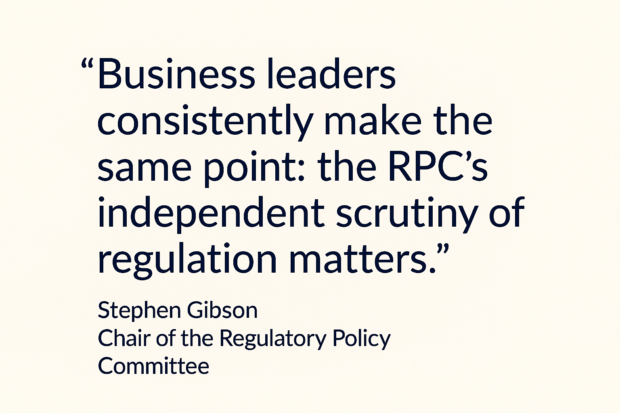
Across sectors – from manufacturing to hospitality, from small enterprises to major corporations – business leaders consistently make the same point: the RPC’s independent scrutiny of regulation matters.
"The Regulatory Policy Committee continues to play a key role in holding government to account on its commitments to growth-focused and proportionate regulation – a big consideration for CBI members investing in the UK."
Rupert Soames, President of the Confederation of British Industry (CBI)
This isn't about opposing regulation. Businesses understand that well-designed rules protect workers, consumers, and fair competition. What they need is confidence that regulation is built on solid evidence – that someone independent has checked the analysis before policy proposals become law.
"The future growth of UK manufacturing relies on a regulatory environment that enables them to innovate while also upholding critical safety, quality and environmental standards across industry. The important role of the Regulatory Policy Committee is vital to ensuring that regulation works for manufacturers."
Stephen Phipson CBE, CEO, Make UK
For manufacturers navigating complex supply chains and international competition, poorly-evidenced regulation isn't just frustrating – it's a competitive disadvantage. Independent scrutiny helps ensure that when government acts, it acts on the basis of robust analysis.
The hospitality sector, which employs over 3 million people across the UK, depends on regulatory decisions being proportionate and well-informed.
"From a business perspective, the work of the Regulatory Policy Committee is crucial in ensuring legislation is based on accurate evidence and data. As a sector that is regularly impacted by new regulation, having an independent body we can liaise with to give the business view on costs or benefits to UK hospitality operators is vital."
Kate Nicholls OBE, then Chief Executive, now Chair, UK Hospitality
And it's not just large sectors. Small businesses – the backbone of the UK economy – benefits perhaps most of all from independent scrutiny that considers whether regulations can be designed to avoid disproportionate burdens.
"Making sure the impact of regulation on small businesses is recognised is vital, and the RPC's scrutiny in this area is to be commended. Small firms do not have access to the same level of compliance resources as their large counterparts, so making sure that regulation does not prevent small businesses from fully participating in the economy is key."
Tina McKenzie MBE, Policy Chair, Federation of Small Businesses
The Institute of Directors captures the broader principle:
"Now more than ever, it is essential that proposed regulation is fully thought through in terms of its effectiveness, proportionality and impact on economic growth. The RPC plays an important role in independently scrutinising this process."
Jon Geldart, Director General, Institute of Directors
Independent scrutiny isn't red tape. It's the mechanism that helps ensure regulation achieves its intended purpose without imposing excessive costs or unintended consequences. When business leaders across every sector unite behind this principle, it reflects a shared understanding: good evidence makes better regulation, and better regulation supports sustainable growth.
🔗 Read more about how independent scrutiny supports better regulation: https://www.gov.uk/government/organisations/regulatory-policy-committee
Leave a comment