The business case for independent scrutiny
This is the second post in our series on "Why the RPC matters" explaining the importance of our independent scrutiny.
Stephen is Chair of the Regulatory Policy Committee. He has over 30 years’ experience working as a professional economist across a range of regulated sectors including post, water, rail, aviation, ports, energy and telecoms. He is a Senior Fellow at the Harvard Kennedy School of Business and Government at Harvard University and also a Senior Fellow at LSE. He is a member of the Bank of England’s Cost-Benefit Analysis panel and was a member of the CAA’s expert advisory panel on airport regulation.
This is the second post in our series on "Why the RPC matters" explaining the importance of our independent scrutiny.
This is the first post in a new series on ‘Why the RPC matters’ from our Chair, Stephen Gibson, explaining the importance of our independent scrutiny.
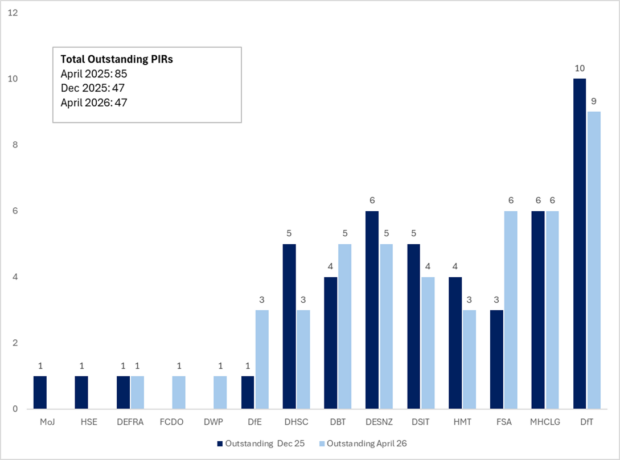
Post-implementation reviews (PIRs) play a vital role in ensuring that regulations remain proportionate and effective. This blog provides an update on that latest position: the number of outstanding PIRs across government and the progress by the eight departments with the largest backlogs against the commitments that they made.
The report reflects on a very busy year with many changes for the RPC, including the completion of the transition to the revised Better Regulation Framework (BRF).
The RPC has published updates to its summaries of the ratings it gives impact assessments.
In April, our Blog on departments’ performance in undertaking regulatory evaluation noted that there was a backlog of 85 outstanding Post Implementation Reviews (PIRs), of which over 40% related to Department for Transport measures. The Blog also included commitments to …
As the RPC publishes new case histories guidance on monitoring and evaluation, Caroline Elliott, RPC member and chair of the RPC Methodology Sub-group, explains the importance of incorporating M&E plans as regulation is developed.
Stephen Gibson and Caroline Elliott of the RPC set out some of the issues that governments face in making policy decisions when peoples' lives are involved.
The RPC has today published information on outstanding Post-Implementation Reviews (PIRs) across government. Stephen Gibson, Chair of the RPC, commends departmental commitments to address the backlog.
The RPC is the independent regulatory scrutiny body for the UK government, sponsored by the Department for Business and Trade.